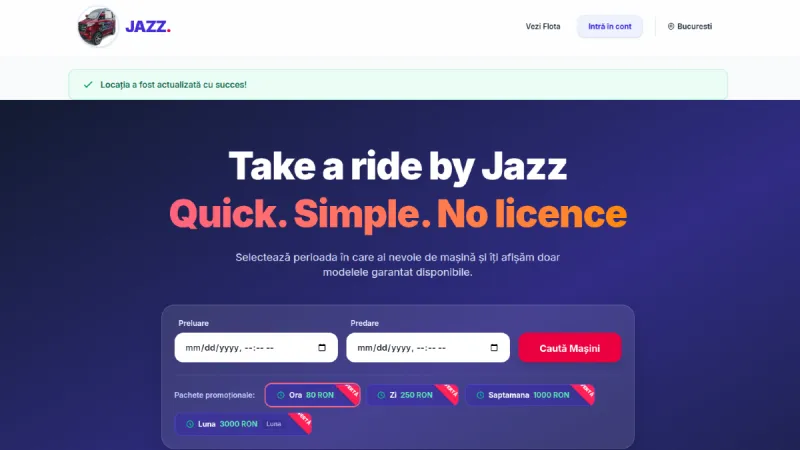
The digitalization of car rental services has long surpassed the stage of a simple web form. Today, companies in this sector require comprehensive ecosystems capable of managing fleets, compliance checks, and financial transactions in real time, with absolute precision. Recently, while engineering the architecture of such an advanced vehicle booking and management system, I documented a series of technical approaches that redefine how we handle a platform with strict operational requirements.
Here is a breakdown of how current technologies can automate an end-to-end business, moving from simple database queries to complex billing algorithms.
The Technical Foundation: Stability Above All
For a project handling critical financial and security flows, the choice of the technology stack dictates the pace of development and maintenance. The solution relies on Laravel 12 (PHP 8.3) as the core backend engine, paired with Filament v3 for managing backoffice operations.
As a full-stack developer focused on professionalism and best practices, I know that a robust architecture is never conceived or tested directly in production. Every feature—from dynamically modifying pickup schedules to processing payments—is implemented through a strict pipeline, initially run in local environments and on mirror servers. Only this guarantees the platform's stability when field agents use it at full capacity.
Filament proved to be the perfect tool here. Beyond its granular permission control system (Admins, Managers, Operators), it allows the integration of operational flows directly into the dashboard, such as capturing digital signatures (via saade/filament-autograph) for on-site contracts. The client-facing interface was kept highly reactive using Alpine.js and Tailwind CSS v4, enabling complex validations directly in the browser without wait times.
Security, KYC, and Risk Management
In the rent-a-car industry, identity validation and fleet protection are top priorities. The architecture includes a strict KYC (Know Your Customer) verification flow. Users cannot book a vehicle without uploading the required documentation (ID, proof of address, selfie), and operators validate this data directly from the backoffice. Any rejection automatically resets the system and clears temporary data to ensure traceability.
On the financial side, the integration with Stripe SDK v20 is not just about collecting funds. The flow involves using Webhooks to authorize blocking deposit holds. If the deposit hold fails, the system blocks the ride status from changing to "in_progress". Furthermore, adherence to European PSD2/SCA directives ensures an explicit mandate is obtained to automatically debit the card (off-session) in case of future damages or fines.
The Intelligence Behind It: Algorithmic Billing and Debts
What makes such a system truly enterprise-level is the business logic translated into code:
- Chronometric Precision: Every minute of delay is calculated and billed immediately, without any grace period. Conversely, if a vehicle is returned early under certain intermediate pricing plans, the system calculates a proportional refund, stored as credit (remaining minutes) for future rides.
- The Greedy Algorithm for Extensions: When a client wishes to extend an active ride, the application doesn't just add up hours. A specialized service (PlanMatchingService) runs a greedy algorithm that decomposes the extra time and identifies the optimal combination of pricing plans, prioritizing larger volume plans to maintain a fair and transparent cost.
- Automated Debt Collection: Perhaps the most effective measure against defaulting clients is the automatic generation of debts. Whether it's unpaid overtime, the retroactive addition of a passenger, or a damage cost (AdditionalCost), the system automatically creates a Debt. This instantly blocks the client's account from initiating other bookings until an operator manually clears the liability.
Conclusion
Building a complex rent-a-car platform is not just a design exercise, but an ongoing challenge in optimization. From Eloquent subqueries designed to avoid memory spikes and N+1 issues, to generating PDF documents (with Base64 embedded images) and dispatching asynchronous background email jobs, the system is engineered to scale.
Highly customized niche solutions demonstrate the maturity of today's PHP/Laravel ecosystem. With the right stack and a clean development methodology, code ceases to be just an application and becomes the very foundation upon which an entire business operates.
HERE YOU CAN SEE THE PLATFORM: jazz.rent