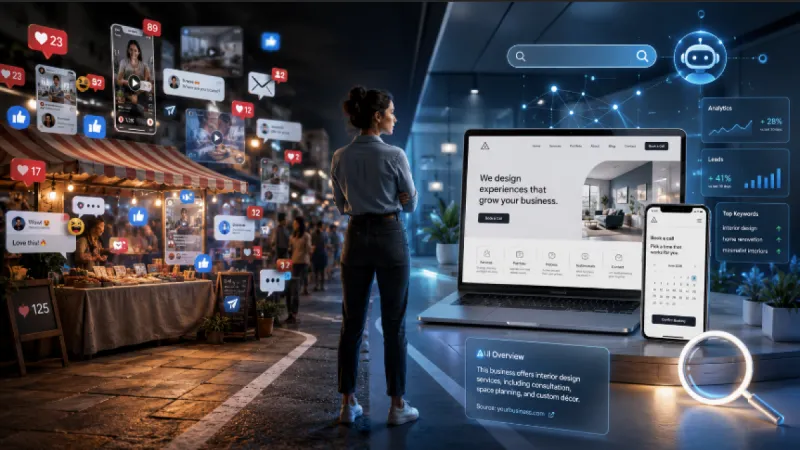
In the digital landscape of 2025, landing pages continue to represent one of the most powerful conversion tools for online businesses. These specialized web pages, created with a single purpose in mind, have evolved significantly from their early basic concepts and have become sophisticated elements of user experience engineering.
What Is a Landing Page and Why It Matters
A landing page is a standalone web page specifically designed for a particular marketing or advertising campaign. Unlike a website’s homepage, which serves multiple purposes and offers numerous navigation options, a landing page is built around one clear objective: to drive visitors toward a specific action—whether it’s signing up for a newsletter, downloading an ebook, or making a purchase.
"The perfect landing page is like a digital salesperson who never gets tired and delivers the same optimized pitch to every visitor," digital marketing experts explain.
Current Trends in Landing Page Design
Functional Minimalism
In 2025, the dominant trend is toward minimalist designs that emphasize clarity and functionality. Companies have realized that cluttered layouts can distract from the primary call-to-action. Generous white space, clear typography, and limited color palettes are defining features of successful modern landing pages.
Dynamic Personalization
Machine learning technology now enables landing pages that adapt in real time to the visitor’s profile. By analyzing demographic data, browsing behavior, and traffic source, these pages can dynamically adjust content, images, and even call-to-action buttons to maximize relevance for each individual user.
Mobile-First Optimization
With over 60% of web traffic coming from mobile devices, landing pages must be designed primarily for small screens. This means larger buttons, shorter text, and images optimized for fast loading on mobile connections.
Essential Elements of a Successful Landing Page
Headline
The first thing a visitor sees must communicate the value proposition within 5–7 seconds. An effective headline answers the question: “What benefit do I get by staying on this page?”
Value Proposition
This should be clearly and concisely communicated, explaining what makes the product or service unique and why it should be chosen over competitors.
Optimized Call-to-Action (CTA)
The action button must stand out through color, size, and placement. Its text should be specific and create a sense of urgency or clear benefit.
Social Proof
Testimonials, reviews, client logos, or usage statistics build trust and reduce friction in the decision-making process.
Optimized Forms
Contact forms should only request essential information. Each additional field reduces conversion rates by approximately 11%.
Technologies and Tools for Landing Page Development
No-Code/Low-Code Platforms
Tools like Unbounce, Leadpages, or Instapage allow rapid landing page creation without advanced programming knowledge. These platforms offer optimized templates and integrated A/B testing tools.
Development Frameworks
For developers who prefer building from scratch, modern frameworks like Next.js, Nuxt.js, or Gatsby offer superior performance and maximum customization flexibility.
Analytics and Optimization Tools
Google Analytics 4, Hotjar for heatmaps, and Optimizely for A/B testing are essential for understanding user behavior and continuous optimization.
Key Metrics and KPIs
Conversion Rate
This is the percentage of visitors who complete the desired action. The average conversion rate for landing pages ranges between 2–5%, but well-optimized pages can reach 15–20%.
Time on Page
Too short a time may indicate content irrelevance, while too long without conversion may suggest confusion or lack of clarity.
Bounce Rate
A high bounce rate can signal a mismatch between the expectations set by the traffic source and the landing page content.
Current Challenges and the Future of Landing Pages
Data Privacy and GDPR
Data protection regulations have made collecting visitor information more complex. Modern landing pages must integrate cookie consent mechanisms and adhere to transparency principles.
AI and Automation
Artificial intelligence is playing an increasingly important role in landing page optimization. From automatically generating A/B test variants to real-time content personalization, AI is becoming a powerful ally for digital marketers.
Integration with Complex Ecosystems
Modern landing pages are no longer isolated entities but integrated components within complex marketing ecosystems that include CRMs, email marketing platforms, and automation tools.
Conclusion
Landing pages remain a fundamental element in digital marketing strategies, but their form and functionality continue to evolve rapidly. Success in 2025 depends on the ability to combine user-centered design with modern technologies, while maintaining a clear focus on measurable business objectives.
For companies aiming to stay competitive, investing in optimized landing pages is not just recommended—it’s essential for survival in an increasingly competitive digital environment.