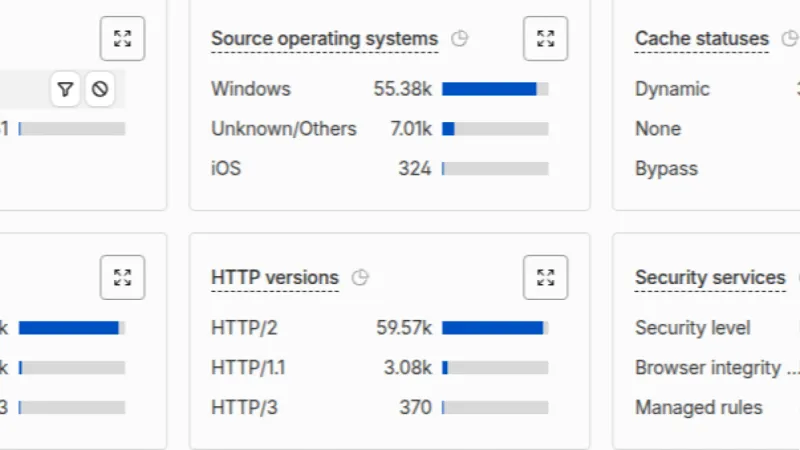
The other day, the quiet of my dashboards was shattered by an alert no website owner wants to see: an absolutely absurd traffic spike. Over 63,000 requests thrown at my server in an extremely short time window, out of which nearly 4,000 were POST requests aimed directly at my contact form.
I immediately activated Cloudflare's "I'm Under Attack" mode and sat down to analyze the logs, ready to bring out the "heavy artillery". But as I sifted through the data, the adrenaline quickly turned into an ironic smile.
I wasn't dealing with a cybercrime syndicate. I was dealing, most likely, with an envious fellow developer or a "script kiddie" who had just discovered the free version of Burp Suite and decided to blindly hit the Automated Scan button on my domain.
The "hacker" with off-the-shelf tools
Let's be clear: there's no glory in grabbing a penetration testing tool off the internet and blindly launching thousands of predefined payloads (from Oastify to Burp Collaborator) hoping something breaks. In my Nginx logs and Umami statistics, I could see this individual's script desperately throwing everything but the kitchen sink: Time-Based SQL Injections, Path Traversals (../../windows/win.ini), terminal command execution attempts, and a Cross-Site Scripting (XSS) bombardment that polluted my URLs with apostrophes and broken HTML tags.
Everything ran automated, from a fixed connection in a provincial town. There's a sad irony here. In an industry where we should be united, building solutions and educating the market, some choose to waste their time and electricity trying to tear down other people's work. My friend, if you're reading this: the logic behind my application took your malicious injections, treated them as harmless text, and politely emailed them to me. You didn't hack my server; you just filled my inbox with spam.
The thought experiment: What if I had a vulnerable WordPress site?
This incident made me think about clients who don't understand why a website "costs so much" or why I insist on from-scratch solutions (custom code/solid frameworks) instead of themes bought on sale.
Imagine if this attack of over 60,000 requests had hit a presentation site or an online store built on a WordPress installation that hasn't been updated in two years, full of sketchy plugins.
- For SQL Injection: The database would have caved, exposing email addresses, passwords, and personal client data.
- For Path Traversal: The attacker would have read the server's configuration files.
- For the sheer traffic volume: The server would have collapsed (500 or 502 Error), and the business would have been offline for hours.
But on a clean architecture, with a modern backend framework, things are different. There is native CSRF protection (which automatically rejects forged requests), database queries use prepared statements (making SQL injections impossible), and "dirty" traffic is elegantly filtered by a WAF (Web Application Firewall) like Cloudflare. You don't have to be a genius developer; you just need to avoid cutting corners, do your job responsibly, and use the right architecture.
The golden rule for any entrepreneur who wants a website
If you are in the position of hiring a web developer, don't just ask "How fast will it be ready?" or "Can you make this button bigger?". The security of your data and your clients' data isn't an optional module you add later.
You need to ask uncomfortable questions:
- "How are you protecting my database from automated attacks?"
- "What happens if someone runs a vulnerability scanner on my forms?"
- "Are we using a WAF (like Cloudflare) to block malicious traffic before it hits the server?"
As a developer, your job isn't just to write some screens that look good on a phone. Your job is to build a digital fortress. Your client needs to sleep soundly at night, knowing that if some "Sunday hacker" decides to vent their frustrations on their server, all they'll manage to generate is a log full of HTTP 403 (Forbidden) and 422 (Unprocessable Entity) codes.
As for my anonymous attacker: thanks for the free stress test. It works perfectly.